

202007 - Sleeping Through Rush Hour
He slept on the tube floor while the whole city carried on around him.

Letter ID: LON-202007
Dear London,
It was a cold Tuesday morning when I got on the Victoria line at Stockwell, just before 9am. The tube was almost empty and then it filled the way it always does at this time of the morning. One stop, two stops, and suddenly the carriage was 80% full. By Victoria it was packed tight, bodies pressed close, eyes fixed forward, everyone in their own little worlds as they brave the London commute into work.
But from the moment I got on, there was a man on the floor.
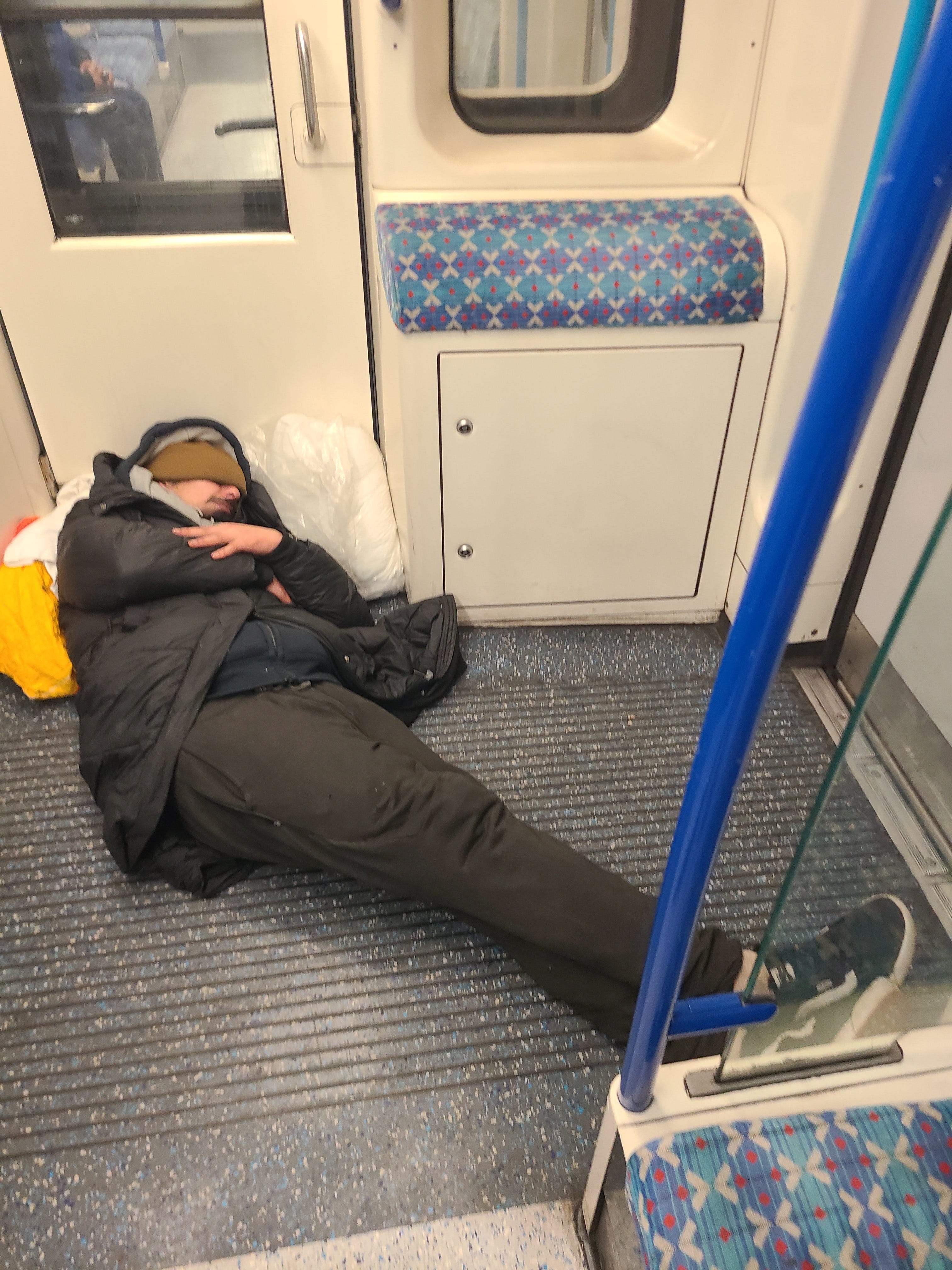
He was curled up against the carriage door, fast asleep, completely still. Not slumped in a seat, not leaning against a pole, just lying down, like the Tube had become his bedroom and the door his headboard. A jacket pulled tight, a hat down low, face half-hidden. He didn’t move when the train jolted. Didn’t flinch when people stepped over him. Didn’t stir when the announcements boomed and the doors hissed open and shut again
And what surprised me most wasn’t him. It was us.
People noticed. You could see it in the quick glance, the widened eyes, the kind of look that registers a problem, files it away, and moves on. Commuters streamed around him careful not to disturb, careful not to acknowledge. Not a single word was spoken. Not a “Mate, you alright?” Not a “Do you need help?” Just silence, and the choreography of avoidance.
At Oxford Circus, dozens stepped right over him to get off. At Warren Street. At Euston. At Highbury & Islington. Same thing. The train kept moving, and so did everyone else. By the time I got off at Finsbury Park about twenty minutes later, he hadn’t shifted even an inch from the position he was in when I boarded.
I walked off the train and I carried the moment with me, because it didn’t feel like a one-off.
This is what homelessness looks like now, isn’t it? Not always a person with a cup and a sign outside a station, not always the image people hold in their head. Sometimes it’s a body on the floor of a rush-hour carriage, existing in the same space as everyone.
And the city has changed around it in ways that make it harder to respond, even when people want to. We’re cashless now. Most of us move through you with our money locked behind screens and passwords, tapping and swiping without ever holding a coin. So even the old instinct “Let me give you something” doesn’t land the same. There’s no loose change at the bottom of a pocket. No quick way to help without stopping, without thinking, without opening a whole new conversation you don’t feel equipped to have at 8.50am on a Tuesday.
London advertises itself as “world-class,” city and while luxury towers rise and new developments promise “city lifestyle” and “vibrant living,” but have the basics have started to feel like a lottery? Rents climb, affordable housing feels like a myth the government tell younger people to keep them hopeful. Waiting lists stretch for mental health support, substance misuse treatment, emergency accommodation — and the longer the wait, the more likely someone slips further away from the version of themselves that could have made it to an appointment in the first place.
You can’t build consistency on chaos. You can’t focus on recovery when your first job every day is staying warm, staying safe, staying alive.
I think that’s the part many of us don’t understand. Homelessness isn’t just a lack of an address. It’s constant movement. Constant risk assessment. Which bus routes run late. Which stations stay warm. Which doorways feel safest. Which places you’ll be moved on from. Which organisations might still be open today. It’s living on alert, and that kind of tension doesn’t switch off just because someone finally closes their eyes on the floor of a Tube carriage.
So when I saw him asleep, I couldn’t help imagining the story behind it. Not in a romantic way. In a real way. Job loss? Relationship breakdown? Domestic abuse? Untreated trauma? Mental health decline? Addiction? A system that missed him again and again until the last option left was the cold floor of the underground network? Homelessness is rarely the beginning. It’s often the final stage of problems that were building long before the doors ever opened.
And still… we stepped over him.
I don’t even want to pretend I’m above it, because I didn’t wake him either. I watched the same way everyone watched. I felt that discomfort — the internal argument between compassion and fear, between “someone should do something” and “what if it goes wrong?” Between wanting to help and not knowing how. I hate that about us. I hate that about me. But maybe what I hate most is how normal it looked. How quickly the moment blended into the rhythm of the morning.
That man slept through rush hour.
The question I keep asking myself is this: have we started to accept homelessness as part of your scenery or are we still capable of being moved enough to act, even in small ways, even when we don’t know what to do?Valerie
Occasionally we shape real stories into letters, so every voice is heard.
Source: Letter sent by writer
Photo Credits
Images are sourced to enhance the reading experience and do not depict the original writer
• Letter image: iStock.com/kemie
• Image 2: Taken by Letters2London reporter